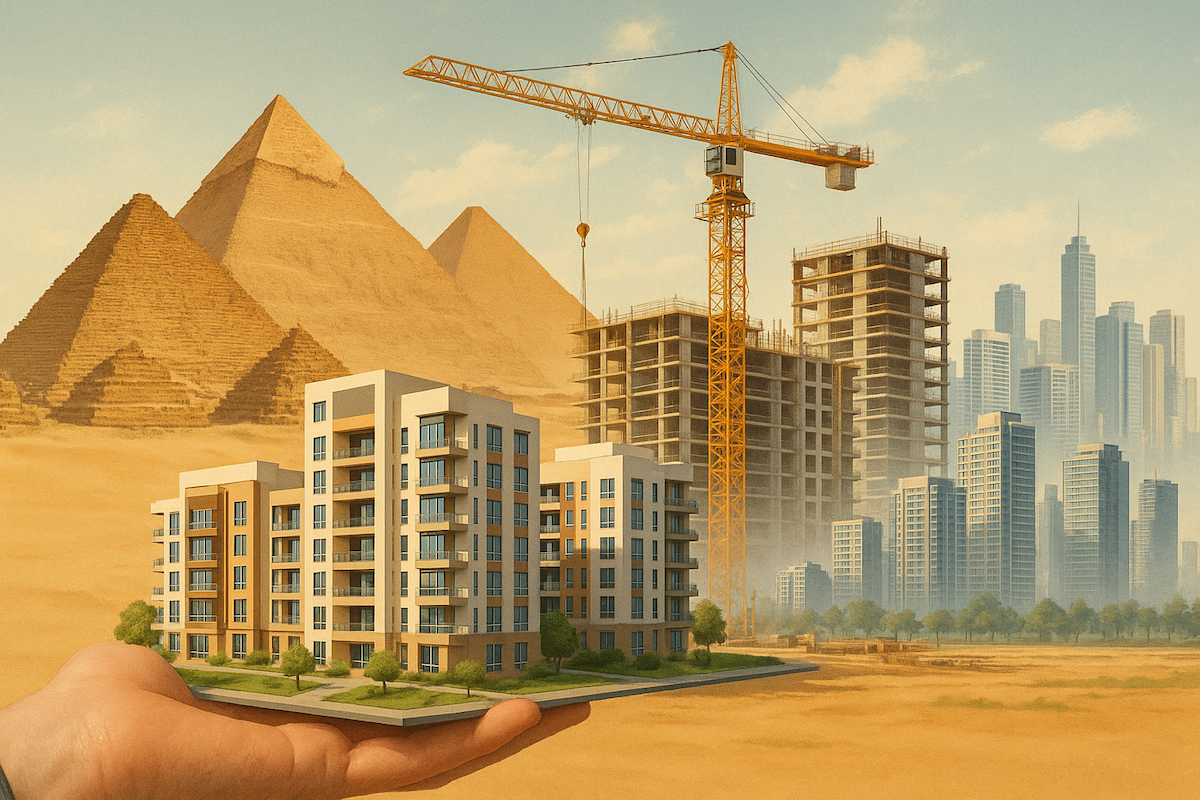
Egypt’s real estate landscape is undergoing a transformation of unprecedented scale and ambition. For decades, the market was defined by vertical growth within the confines of the Nile Valley and the dense urban sprawl of cities like Cairo and Alexandria. Today, however, the narrative has decisively shifted. The engine of the real estate development market is no longer just downtown high-rises or suburban compounds; it is the massive, state-backed drive into the desert, giving birth to a new generation of planned cities and communities that promise to redefine how Egyptians live, work, and play.
This strategic pivot is not merely a trend but a necessity. With over 95% of the population living on just 5% of the land, the pressure on ancient infrastructure and resources had reached a breaking point. The government’s response has been bold: a comprehensive national agenda focused on creating new urban centers to decongest the Nile Valley, stimulate economic growth, and provide housing for a burgeoning population. This vision is the single most powerful force shaping the real estate development market today.
The Catalysts: Government Vision and Economic Imperatives
At the heart of this transformation are megaprojects that were once the stuff of imagination. The New Administrative Capital (NAC) is the undisputed flagship. Envisioned as a new hub for government, business, and diplomacy, the NAC has become a magnet for private investment. Its scale is staggering—featuring a new government district, a massive business central park, the Iconic Tower (Africa’s tallest), and smart city infrastructure. For developers, the NAC represents a once-in-a-generation opportunity to build from the ground up, unencumbered by the legacy challenges of old cities.
Alongside the NAC, other major projects are creating a constellation of new opportunities. New Alamein is rising on the Mediterranean coast as a year-round tourist and residential destination, while the expansion of New Cairo and the development of New Galala are adding significant inventory. These projects are not happening in isolation; they are supported by massive infrastructure investments, most notably the nationwide road network that has drastically improved connectivity between these new communities and traditional urban centers.
The Developer’s Playground: Evolving Market Dynamics
This new frontier has fundamentally altered the dynamics of the real estate development market. The market can now be segmented into two parallel tracks: the mature, supply-constrained market of established cities and the fast-evolving, supply-rich market of the new communities.
In the new cities, competition is fierce. Developers are no longer just selling square meters; they are selling a lifestyle. This has led to a significant elevation in product quality and community planning. Integrated compounds offering a full suite of amenities—from schools and hospitals to shopping malls and sports clubs—have become the standard. The emphasis is on green spaces, security, and a higher quality of life, catering primarily to the upper-middle and high-income segments.
Financing has also evolved. While pre-sales remain a dominant model, there is a growing trend of partnerships with major financial institutions to offer attractive payment plans, making units more accessible. Furthermore, the government’s initiative to offer plots of land to developers in these new areas has accelerated the pace of construction and supply.
Challenges on the Horizon
Despite the booming activity, the path is not without its challenges. The sheer speed of development has led to concerns about a potential oversupply in the high-end segment. With numerous developers targeting the same affluent demographic, there is a risk of market saturation, which could pressure prices and rental yields in the medium term.
Affordability remains a critical issue. While the new communities address a housing need, their primary audience is not the lower-income majority. The government is attempting to bridge this gap through social housing programs, but the core private development market in the new cities is largely out of reach for a significant portion of the population.
Infrastructure, while improving, must keep pace with the rapid construction of residential units. The ultimate success of these communities hinges on the timely completion of utilities, public transportation, and social services to ensure they become vibrant, lived-in cities rather than mere collections of buildings.
The Future is Planned
The direction of Egypt’s real estate market is clear. The development focus will continue to gravitate towards these new communities for the foreseeable future. The next phase will likely see a maturation of these markets, with a greater emphasis on commercial and retail real estate to create job centers and ensure their long-term sustainability. There is also immense potential for developers who can innovate in the mid-income segment within these new cities.
Furthermore, sustainability is becoming a key differentiator. As global environmental concerns grow, developers who incorporate green building practices, energy-efficient designs, and water conservation technologies will gain a competitive edge.
In conclusion, Egypt’s real estate development market is in the midst of a historic transition. Driven by a compelling national vision and the relentless activity of private developers, the country is building its future literally from the desert sands. The new communities represent more than just new housing; they are a test of Egypt’s ability to plan for its future, manage its growth, and create a new, more sustainable urban model. While challenges of affordability and saturation persist, the sheer scale of this ambition has already irrevocably changed the map of Egyptian real estate, creating a new frontier that will define the market for generations to come.

Join The Discussion